
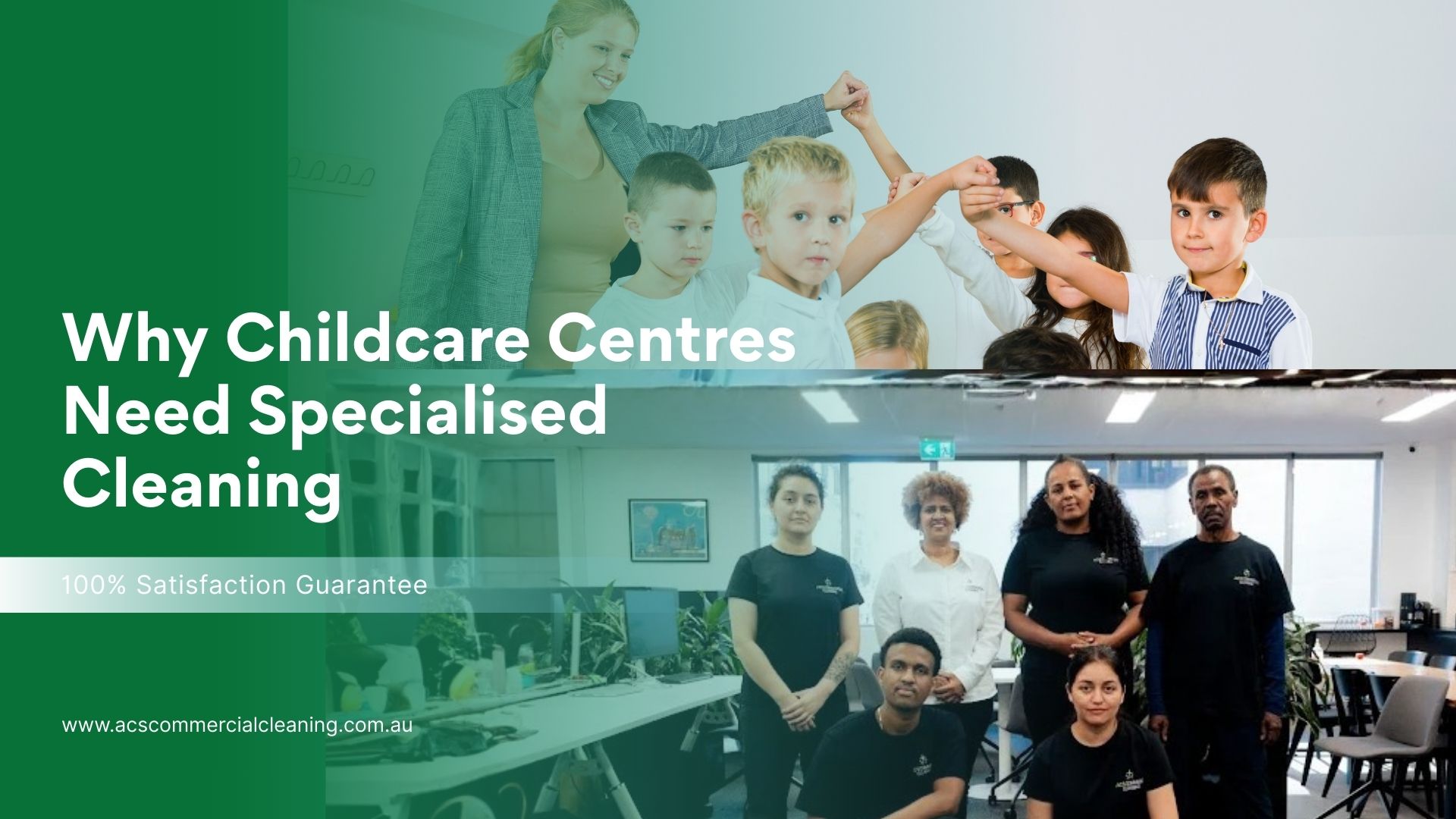

When a gastroenteritis outbreak forces your centre to close, the financial and reputational consequences extend far beyond a single lost day. Centre directors carry direct accountability for environmental hygiene under the National Quality Framework, yet many unknowingly rely on cleaning providers who lack the specialised protocols required for early learning environments. The difference between a generic office cleaner and a qualified childcare hygiene specialist is measurable in infection control outcomes, regulatory readiness, and parent confidence.
The Hidden Risk of Using Generic Office Cleaners
Office cleaning operates within a fundamentally different risk paradigm. A corporate workspace serves adults with developed immune systems who don’t put furniture in their mouths or spend extended periods on floors. The cleaning protocols designed for these environments—quarterly deep cleans, surface-level disinfection, and aesthetic presentation—fail comprehensively when applied to spaces where toddlers crawl across floors before eating sandwiches with unwashed hands.
Generic providers typically operate on efficiency models optimised for square metre coverage rather than pathogen elimination. Their staff may rotate frequently across diverse commercial sites in a single day, creating unintended cross-contamination vectors. More critically, they rarely understand the regulatory implications of inadequate hygiene documentation. When an Environmental Health Officer requests evidence of your viral outbreak response protocol during an assessment, discovering your cleaner doesn’t maintain pathogen-specific logs becomes an expensive problem.
The cost calculation changes entirely when you factor in closure days. A single gastro outbreak requiring three days of decontamination and lost enrolment fees can exceed $15,000 for a medium-sized centre. Generic cleaning providers price competitively because they’re not equipped to prevent these scenarios—they’re designed to make spaces look presentable, not to function as your first line of defence against notifiable diseases.
Why Childcare Environments Require Higher Cleaning Standards
Early childhood settings present unique infection control challenges that office environments simply don’t face. Children under five experience 6-8 viral infections annually on average, and the confined, high-touch nature of childcare creates ideal transmission conditions. Unlike adults who’ve developed pathogen resistance, young immune systems are encountering most viruses for the first time. When one child presents with rotavirus, the question isn’t whether transmission will occur, but how effectively your environmental hygiene protocols contain it.
The surface contact patterns differ fundamentally. Adults primarily touch doorknobs, desks, and shared equipment. Children in care settings place their mouths directly on toys, sleep mats, and furniture edges. They transfer pathogens from nappy change areas to sandpits, from toilet training seats to dramatic play kitchens, creating contamination pathways that require specialised understanding. Floor-level hygiene matters exponentially more when infants spend developmental hours crawling across surfaces that adults never contact.
Regulatory frameworks reflect these heightened standards. The National Quality Standard’s Quality Area 3 explicitly addresses physical environment expectations that extend well beyond standard commercial cleaning scope. Assessors evaluate whether skirting boards harbour dust accumulation, whether bathroom grout shows mould presence, and whether outdoor play equipment demonstrates consistent maintenance. These aren’t aesthetic preferences—they’re compliance requirements that generic providers aren’t trained to address.
The biological reality of respiratory droplet transmission in group care settings demands a different approach entirely. When children sing together during circle time, they’re generating aerosol clouds that settle on every horizontal surface within three metres. Standard office cleaning schedules don’t account for this constant recontamination cycle. Childcare hygiene specialists understand that disinfection timing matters—cleaning at 3am means surfaces accumulate twelve hours of fresh contamination before children arrive. Optimal protocols align disinfection schedules with occupancy patterns, a distinction lost on providers focused purely on after-hours access convenience.
Compliance Expectations Many Centres Underestimate
The regulatory complexity of operating an early learning centre extends into hygiene documentation with a thoroughness that catches many operators unprepared. Quality Area 3 of the National Quality Standard doesn’t simply expect clean premises—it requires documented evidence of systematic hygiene management. During assessment, authorised officers may request your cleaning specifications, chemical safety data sheets, and outbreak response protocols. Discovering at that moment that your provider maintains no such documentation creates compliance gaps that directly impact your rating.
Victorian childcare centres operate under the oversight of the Department of Education and Training, which cross-references environmental health standards with local government requirements. When an Environmental Health Officer conducts an inspection following a parent complaint about bathroom conditions, they’re assessing whether your cleaning scope addresses pathogen reduction, not merely aesthetic tidiness. Generic providers typically can’t produce the evidence assessors require because their systems weren’t designed to generate it.
The legal implications compound significantly during outbreak scenarios. If multiple children contract hand, foot and mouth disease and parents question your hygiene protocols, your cleaning provider’s documentation becomes a critical liability shield. Providers experienced in educational facilities maintain detailed logs of disinfection cycles, chemical dilution ratios, and high-touch surface frequencies. These records demonstrate due diligence when regulators investigate. Offices don’t face these documentary standards because the consequences of inadequate cleaning don’t involve vulnerable populations or mandatory reporting obligations.
Chemical safety requirements add another layer of specialisation. The chemicals safe for a law firm’s floors may not meet the non-toxic standards required for spaces where infants crawl before placing hands in mouths. Providers serving childcare must navigate TGA-listed products, understand food-safe disinfectant classifications, and maintain material safety data documentation that satisfies both WorkSafe and council inspectors. Few office cleaning contractors maintain these chemical management capabilities because their client base doesn’t demand it.
What Defines a Specialized Childcare Cleaning Provider
Genuine childcare cleaning specialists operate within a completely different operational framework than conventional commercial cleaners. The foundation begins with staffing compliance—every person entering your premises must hold a valid Victorian Working With Children Check and current National Police Check. This isn’t a courtesy; it’s a mandatory screening requirement that generic providers often overlook until a centre requests verification. Specialist commercial cleaning companies serving education sectors maintain these credentials as standard practice, providing documentation for your compliance register without prompting.
Protocol depth separates specialists from generalists immediately. True childcare hygiene providers maintain separate cleaning equipment designated exclusively for bathroom areas versus food preparation spaces. They understand that the mop used on toilet floors cannot enter your kitchen under any circumstances, a cross-contamination principle that office cleaners may not even recognise. Equipment colour-coding systems, separated chemical storage, and pathogen-specific disinfection schedules reflect an operational sophistication built through serving regulated environments.
Training investment reveals provider commitment. Staff serving early learning centres should demonstrate competency in viral decontamination protocols specific to gastroenteritis, influenza, and hand, foot and mouth disease. They need to understand the distinction between cleaning, sanitising, and disinfecting—terms that generic providers often use interchangeably but that mean fundamentally different things in infection control contexts. When a centre reports a confirmed rotavirus case, qualified specialists immediately shift to outbreak protocols involving TGA-listed virucidal chemicals and specific contact time requirements. Office cleaners typically lack this pathogen-specific knowledge entirely.
The quality assurance mechanism matters significantly. Educational facility specialists conduct their own compliance audits using checklists aligned with National Quality Standard assessment criteria. They proactively identify the same environmental concerns an authorised officer would note—dust on ceiling fans, grime accumulation on door frames, inadequate grout maintenance—because their operational model includes preventing assessment findings, not just responding to complaints. This represents a fundamental strategic difference: specialists function as your compliance partner, not merely a service vendor.
The Operational Advantages of Choosing a Commercial Specialist
Centres partnering with dedicated commercial cleaning specialists immediately notice the difference in operational consistency. True commercial-grade providers deploy direct employees rather than subcontractors, meaning you receive the same trained team members each visit. These staff learn your facility’s specific requirements—which storage areas hold allergen-friendly food, where your security panel is located, how your specific alarm system operates. This institutional knowledge directly reduces your operational burden and eliminates the constant retraining cycle that comes with rotating contractor teams.
The staffing infrastructure behind serious commercial operations creates reliability that generic providers can’t match. When one team member calls in sick, established commercial cleaning companies have structured backup systems and cross-trained staff. Your centre doesn’t experience service gaps or receive untrained substitutes who don’t know your procedures. This workforce depth particularly matters during gastro season when consistent disinfection protocols cannot be interrupted due to staffing shortages.
Commercial specialists understand risk management from a business partnership perspective. They maintain comprehensive public liability insurance specifically covering early learning environments, carry workers compensation insurance that protects you from contractor injury claims, and often provide service guarantees backed by actual recourse mechanisms. Some operators offer thirty-day satisfaction guarantees—if the cleaning doesn’t meet your standards within the first month, you don’t pay. This level of accountability simply doesn’t exist with low-cost providers operating on razor-thin margins.
The equipment investment signals operational seriousness. Purpose-built commercial providers arrive with hospital-grade disinfection equipment, HEPA-filtered vacuums that actually remove allergens rather than redistributing them, and steam cleaning technology that achieves chemical-free sanitisation on infant crawling surfaces. These capital investments in specialised equipment demonstrate a commitment to outcomes rather than just covering square metres efficiently. The quality difference becomes immediately apparent in air quality, surface residue presence, and pathogen reduction effectiveness.
How Professional Cleaning Protects Your Reputation With Parents
Parent perception of environmental hygiene directly influences enrolment decisions and renewal rates in ways that extend well beyond actual regulatory compliance. When touring families enter your centre, they instinctively assess cleanliness as a proxy for overall management quality. Dust on window sills, streaks on glass doors, or visible grime in bathroom fixtures creates immediate doubt about leadership attention to detail. Professional specialist cleaning ensures these subtle indicators consistently signal excellence rather than raising unspoken concerns.
The psychological impact of visible cleaning presence matters significantly. When parents arrive for pickup and observe proper disinfection procedures occurring—toys being systematically sanitised, floors receiving appropriate treatment—they receive reassuring confirmation that hygiene protocols continue throughout the day, not just overnight when convenient. Specialist providers understand this stakeholder visibility value and can adjust schedules to include limited daily maintenance sessions that parents actually witness occurring.
Social media amplification has fundamentally changed reputation risk calculations. A single parent sharing photos of inadequate bathroom conditions now reaches hundreds of local families instantly through community Facebook groups. The reputational recovery cost from one viral hygiene complaint exceeds years of premium cleaning investment. Specialist providers function as reputation insurance, ensuring that if parents do examine your facilities critically, they find evidence of professional-grade maintenance rather than ammunition for complaints.
The competitive differentiation becomes particularly valuable during enrolment season. When families compare centres, the ability to confidently state that you employ specialised early learning hygiene protocols—complete with outbreak response capabilities and National Quality Standard-aligned standards—positions you distinctly above competitors using basic cleaning services. This messaging translates directly into waitlist strength and fee positioning authority. Parents will pay premiums for centres demonstrating tangible operational excellence, and verifiable hygiene systems provide clear evidence of that commitment.
Signs Your Current Cleaning Provider May Be Falling Short
Several indicators reveal when your existing cleaning arrangements fail to meet specialised childcare requirements, even if surfaces appear generally tidy. Inconsistent team members present one of the clearest warning signals—if you never see the same cleaners twice, your provider is likely using casual contractor pools rather than dedicated trained staff. This rotation prevents the institutional knowledge development that proper childcare cleaning requires and increases security and compliance risks substantially.
Documentation absence provides another critical red flag. If your provider cannot immediately produce current Working With Children Checks for every staff member entering your premises, you have a serious compliance gap. Similarly, if they lack documented outbreak response protocols or cannot provide safety data sheets for all chemicals used on site, their operational framework wasn’t built for regulated education environments. Quality specialised cleaning services maintain these documents proactively because they understand regulatory requirements.
Observable quality indicators reveal capability limitations quickly. Check whether bathroom grout shows mould accumulation, whether skirting boards display dust buildup, or whether outdoor play equipment demonstrates regular maintenance attention. These areas require specific protocols and timing that generic providers typically miss. If your quarterly deep clean addresses issues that shouldn’t exist with proper ongoing maintenance, your provider’s scope doesn’t match your actual requirements.
The communication pattern exposes operational seriousness. Providers truly specialising in childcare proactively raise concerns about emerging maintenance needs, suggest protocol adjustments based on observed usage patterns, and maintain regular dialogue about compliance readiness. If your cleaner simply performs prescribed tasks without demonstrating environmental understanding or suggesting improvements, you’re receiving basic labour rather than professional hygiene management.
Why Melbourne Childcare Centres Are Raising Their Standards
Melbourne’s early learning sector has experienced notable quality elevation over the past several years, driven by both regulatory evolution and increased family expectations. The competitive density of childcare provision across metropolitan Melbourne means centres cannot afford to compromise on any operational dimension, particularly visible factors like environmental presentation. Families comparing options in suburbs from Docklands to Dandenong increasingly expect commercial-grade hygiene standards rather than basic maintenance.
The regulatory environment continues tightening as the National Quality Framework matures. Assessment and rating processes have become more sophisticated, with authorised officers specifically trained to identify systemic environmental maintenance issues rather than surface-level presentation. Centres achieving Exceeding ratings consistently demonstrate that professional specialist cleaning contributes materially to Quality Area 3 outcomes. This creates competitive pressure—as higher-rated centres become the benchmark, facilities using basic cleaning services find themselves at disadvantage during family evaluations.
Post-pandemic awareness has permanently shifted parent expectations around infection control. Families now expect centres to articulate specific hygiene protocols, outbreak response capabilities, and pathogen reduction strategies. Generic cleaning services lack the specialised knowledge to support these conversations credibly. Centres partnering with qualified specialists can speak confidently about viral decontamination procedures, TGA-listed disinfectants, and evidence-based sanitisation frequencies because their providers actually maintain these capabilities.
Insurance and liability considerations increasingly favour professional providers. As the sector matures, centre operators recognise that inadequate hygiene practices create significant exposure. The financial risk of closure days, family infections, and potential negligence claims far exceeds any cost differential between basic and specialist cleaning services. Forward-thinking operators view professional hygiene management as essential operational infrastructure rather than discretionary service selection.
How to Choose the Right Childcare Cleaning Partner
Selecting an appropriate cleaning partner for your early learning facility requires evaluating capabilities beyond price and availability. Begin by verifying mandatory compliance foundations—request current Working With Children Checks and National Police Checks for all staff who would service your centre. Legitimate specialists maintain these documents readily accessible because they’re fundamental to their operations. Providers who need time to “arrange” this documentation likely don’t maintain proper screening protocols.
Examine the provider’s client portfolio specifically for education sector experience. Ask for references from other childcare centres or schools they currently serve, then actually contact these references to discuss outbreak response experiences, reliability during critical periods, and communication quality. Generic providers may claim childcare capability, but centres that have partnered with them long-term provide revealing insights about actual performance under pressure.
Evaluate their operational structure carefully. Determine whether they employ direct staff or use subcontractors, how they handle sick leave coverage, and what backup systems exist when regular team members are unavailable. Request details about their quality assurance processes—do they conduct internal audits, and if so, what standards do they audit against? Providers genuinely specialising in education facilities should reference National Quality Standard alignment in their quality control framework.
Assess the guarantee structure they offer. The most confident providers typically back their service with meaningful recourse mechanisms—satisfaction guarantees, service level agreements with defined response times, and clear protocols for addressing deficiencies. A thirty-day money-back guarantee signals operational confidence that distinguishes serious commercial operators from competitors hoping to simply secure contracts. This accountability demonstrates they’re building long-term partnerships rather than maximising short-term revenue.
The chemical and equipment discussion reveals technical capability quickly. Ask what specific products they use on infant crawling surfaces and request the corresponding safety data sheets. Inquire about their equipment disinfection protocols between sites and whether they maintain colour-coded systems to prevent cross-contamination. Specialists discuss these technical details comfortably because it’s their core competency; generalists often deflect or provide vague assurances without substance.
Future-Focused Centres Treat Cleaning as Risk Prevention
The strategic centres transforming Melbourne’s early learning landscape recognise environmental hygiene as fundamental risk management infrastructure rather than operational overhead. They understand that professional cleaning services function as their first defence against the scenarios that genuinely threaten their business—regulatory non-compliance, infectious disease outbreaks, and reputation damage through social media exposure. This perspective shift from viewing cleaning as a cost centre to recognising it as essential insurance creates substantially different procurement decisions.
Sophisticated operators budget for professional services from inception rather than seeking the minimum viable option and upgrading only after experiencing problems. They recognise that the cost differential between generic and specialist cleaning—perhaps $200-400 monthly for a typical centre—represents negligible expense compared to the financial impact of even a single outbreak closure or ratings downgrade. The business case for professional services becomes overwhelming when you quantify the actual risks adequately.
The partnership approach these centres adopt differs fundamentally from transactional service relationships. They engage cleaning providers in their quality improvement planning, seek their input on environmental compliance readiness, and value their observations about facility maintenance needs. This collaborative model ensures environmental hygiene supports rather than simply reacts to operational demands. Providers operating at this level become genuine stakeholders in centre success rather than interchangeable vendors.
Forward planning increasingly includes pandemic and outbreak preparedness as standard operational capability rather than crisis response. Centres with established specialist cleaning partnerships weathered recent health challenges with significantly less disruption because their providers already maintained the protocols, products, and expertise required. This resilience advantage compounds substantially over time—centres that can remain operational during outbreaks affecting competitors directly capture displaced families seeking stable care solutions.
The investment in professional hygiene management pays returns across every operational dimension. Centres maintain higher assessment ratings, experience fewer infectious disease transmission events, retain families longer due to superior environmental quality, and differentiate themselves credibly during competitive enrolment periods. Perhaps most valuably, centre directors sleep better knowing their environmental hygiene protocols can withstand regulatory scrutiny and protect the vulnerable children in their care.
Professional childcare cleaning isn’t about making spaces look tidy—it’s about creating environments where young children can develop safely while meeting the regulatory standards that protect your operation. Centres throughout Melbourne are discovering that partnering with qualified specialists eliminates risks that generic providers simply cannot address.
If you’re ready to move beyond basic cleaning to professional hygiene management built specifically for early learning environments, ACS Commercial Cleaning provides the specialised capability Melbourne centres depend on. Our teams understand the unique requirements of childcare facilities because education sector cleaning is what we do—not just one service among many generic offerings, but our core competency.
Reach out to discuss how proper hygiene protocols can strengthen your compliance position and protect the families who trust you with their children’s wellbeing. Call 03 9114 9778 or request a consultation to explore what specialised childcare cleaning actually looks like in practice.

