

Switching commercial cleaning providers isn’t a decision most facility managers take lightly. If you’re researching this topic, you’re likely dealing with missed cleans, poor communication, compliance concerns, or staff complaints that have eroded your confidence in your current provider. You’ve tolerated the issues long enough to know they’re not improving, and now you’re evaluating whether the disruption of changing vendors is worth the potential benefits.
The short answer: it absolutely can be, but only if you ask the right questions upfront.
Choosing a replacement cleaning provider without proper due diligence often leads to repeating the same problems with a different company. Melbourne’s commercial cleaning market is competitive, but not all providers operate at the same professional standard. The questions you ask before signing a new contract will determine whether you’re upgrading to a reliable partner or simply trading one set of problems for another.
This guide presents the strategic questions that separate high-performing commercial cleaning companies from those who will disappoint you three months in.
Recognising When It’s Time to Make the Switch
Most businesses don’t switch cleaning providers on impulse. The decision typically follows a pattern of recurring failures that impact operations, tenant satisfaction, or compliance obligations.
Common triggers include cleaners who routinely miss scheduled services without communication, supervisors who are difficult to contact when issues arise, and visible deterioration in cleaning standards despite ongoing payments. Businesses in regulated industries—particularly those requiring medical and healthcare cleaning—often face additional pressure when audits reveal hygiene deficiencies that their current provider hasn’t addressed.
Staff complaints about restroom conditions, kitchen cleanliness, or lobby presentation are another reliable indicator. When your own employees are noticing and commenting on cleaning quality, the problem has moved beyond acceptable tolerance levels.
Contract structures that lack transparency, surprise billing for basic services, or providers who resist implementing feedback are operational red flags that justify a thorough market review. Perhaps most frustrating is the revolving door of unfamiliar staff—when you never see the same cleaner twice, accountability and site familiarity evaporate entirely.
The Hidden Cost of Choosing the Wrong Replacement
The risk in switching providers isn’t the transition itself—it’s selecting another underperformer and resetting the clock on your frustration.
Businesses often focus heavily on price comparison while underweighting operational compatibility. A commercial cleaning provider might offer competitive rates but lack the management systems to deliver consistency across multiple sites, handle after-hours emergencies, or maintain communication standards that align with corporate operations.
Some providers appear capable during the sales process but operate with high staff turnover, minimal training protocols, or inadequate supervision structures. These operational weaknesses don’t surface until you’re locked into a contract and experiencing the same reliability issues that prompted your search.
Many commercial cleaning companies rely on independent contractors rather than employees, which introduces variables outside their direct control. When contractors cancel last-minute or prioritise higher-paying jobs, your facility becomes the casualty—and the cleaning company has limited recourse.
The replacement decision deserves the same analytical rigour you’d apply to any critical service vendor. The questions below are designed to expose capability gaps before they become your operational problem.
The Critical Questions That Reveal Provider Quality
1. Do You Use Employees or Independent Contractors?
This foundational question has far-reaching implications for service reliability, quality consistency, and your organisation’s risk exposure.
Providers using employees maintain direct control over training standards, scheduling, accountability, and performance management. They can enforce quality systems, respond to feedback immediately, and ensure consistent staffing because team members answer directly to the company.
Contractors, conversely, operate as independent businesses. They set their own priorities, may work for multiple cleaning companies simultaneously, and can decline assignments without consequence. This structure inevitably creates scheduling gaps and inconsistent service standards.
Employee-based models also provide greater security and compliance assurance. Employees undergo background checks, receive ongoing supervision, and operate under the company’s insurance and workers compensation coverage. Contractors introduce potential liability gaps that sophisticated facility managers increasingly view as unacceptable risk.
2. Will We Have Consistent Cleaning Teams or Rotating Staff?
Service consistency correlates directly with cleaner familiarity. Teams who service the same facility repeatedly develop site knowledge, understand priority areas, and build accountability for outcomes.
Ask whether you’ll have dedicated cleaners assigned to your location. Providers confident in their staffing stability readily commit to consistent teams because they’ve structured operations to support this model.
Rotating staff models—where different cleaners service your facility each visit—create several problems. New cleaners require repeated orientation, lack awareness of site-specific requirements, and feel less accountable for quality because they won’t see the results of shortcuts taken. Your facility becomes interchangeable with dozens of others in their rotation.
Consistent teams become invested in your facility’s presentation. They notice when standards slip, understand seasonal requirements, and often identify maintenance issues before they escalate. This familiarity delivers value far beyond basic cleaning task completion.
3. What Specific Systems Do You Use to Ensure Consistent Service Delivery?
This question separates professional operations from loosely managed teams. Quality commercial cleaning providers implement documented checklists, digital tracking systems, and regular site audits to maintain standards.
Ask for specifics: How do they verify work completion? What happens when a scheduled cleaner calls in sick? How do they ensure new staff maintain the same standards as experienced team members?
Vague answers about “quality control” or “experienced teams” indicate a lack of operational infrastructure. Look for providers who can describe their supervision model, quality assurance schedule, and corrective action protocols in concrete terms.
ISO-certified providers demonstrate commitment to standardised processes and quality management systems. Triple ISO certification—covering quality management (ISO 9001), environmental responsibility (ISO 14001), and occupational health and safety (ISO 45001)—signals a provider who has invested in operational excellence beyond basic cleaning delivery.
Employee-based companies can implement standardised training and performance management because they control their workforce. This structural advantage makes consistency achievable rather than aspirational.
4. How Do You Handle Communication and Issue Resolution?
Communication failures are among the most common complaints about commercial cleaning providers. Understanding how a company manages routine updates and urgent issues reveals their operational maturity.
Determine who your primary contact will be, how quickly they typically respond to concerns, and what escalation path exists for urgent situations. Professional providers assign dedicated account managers and maintain clear communication protocols rather than forcing you to chase down supervisors.
Ask about their response time commitments for different issue types. A provider confident in their systems will offer specific timeframes and explain how they track and resolve reported concerns.
Owner-led businesses often maintain more responsive communication because decision-makers stay directly involved rather than delegating client relationships to multiple management layers. This structure enables faster problem resolution and proactive service adjustments.
5. What Is Your Staff Retention Rate and Training Program?
High staff turnover directly impacts service consistency. Facilities cleaned by constantly rotating teams rarely maintain the quality standards established during onboarding.
Request information about average staff tenure, training duration for new employees, and ongoing development programs. Providers with low turnover rates typically offer competitive wages, stable scheduling, and career progression opportunities that reduce churn.
Companies employing their cleaners—rather than using contractors—can invest in comprehensive training because they capture the return on that investment. Contractors train themselves and carry that knowledge to competing companies without restriction.
Ask how they ensure continuity when assigned cleaners are unavailable. The presence of trained backup staff and documented site-specific protocols indicates a provider who has anticipated this common scenario.
6. Can You Provide Detailed References from Similar Commercial Environments?
References from businesses in comparable industries and facility types offer the most reliable preview of your likely experience. A provider who excels at retail cleaning may lack the systems required for corporate office cleaning, school cleaning, or industrial environments.
Request references from clients with similar square footage, service frequency, and operational requirements. Contact these references directly and ask about responsiveness, consistency, problem resolution, and whether they would re-select the provider if making the decision again.
Pay attention to how long reference clients have maintained the relationship. Providers with multi-year client retention demonstrate sustained performance rather than strong initial impressions that deteriorate over time. Businesses don’t renew cleaning contracts year after year unless reliability consistently meets expectations.
7. What Performance Guarantees Do You Offer?
Confidence in service delivery manifests as willingness to guarantee outcomes. Providers uncertain about their ability to perform resist accountability mechanisms that expose operational weaknesses.
Ask whether they offer any satisfaction guarantees, and if so, what specific terms govern those commitments. A 30-day money-back guarantee, for instance, demonstrates substantial confidence—the provider believes so strongly in their service quality that they’ll refund your entire investment if expectations aren’t met.
This level of guarantee is rare in commercial cleaning because many providers know their operational inconsistency makes such commitments risky. Companies offering meaningful guarantees have invested in the systems required to deliver reliably, making the guarantee safe to extend.
Understand what triggers the guarantee and how claims are processed. Guarantees with excessive qualification or bureaucratic claim procedures offer little practical value.
8. What Insurance Coverage and Compliance Certifications Do You Maintain?
Commercial cleaning involves potential liability for property damage, personal injury, and compliance with workplace safety regulations. Verifying adequate coverage protects your organisation from risk transfer.
Confirm the provider maintains current public liability insurance, workers compensation coverage, and any industry-specific certifications relevant to your sector. For businesses in healthcare, food service, or other regulated industries, ask about infection control training, HACCP familiarity, or other compliance knowledge.
Request documentation rather than accepting verbal assurances. Professional providers readily supply certificates of currency and compliance documentation because they maintain these as standard business practice.
Employee-based models simplify insurance and compliance verification because all coverage sits with a single entity. Contractor models introduce complexity—you’re potentially relying on multiple individual contractors maintaining adequate insurance and compliance certifications.
9. How Do You Manage the Transition from Our Current Provider?
The transition process reveals organisational competence. Structured onboarding demonstrates that a provider has successfully managed changeovers before and understands the potential disruption points.
Ask about their typical transition timeline, what information they need about your current arrangements, and how they minimise service disruption during the changeover. Quality providers conduct thorough site assessments, document current cleaning schedules, and create detailed handover plans.
Determine whether they’ll overlap with your existing provider to ensure continuity or implement a clean cutover. Understanding their approach helps you plan internal communications and set appropriate expectations with building occupants.
Professional providers often increase management presence during initial weeks to identify procedural adjustments needed and demonstrate their responsiveness. This investment in transition success prevents early missteps that damage client confidence.
10. What Flexibility Exists Within the Contract Structure?
Business needs evolve. Your commercial cleaning arrangement should accommodate reasonable adjustments without penalty structures that lock you into obsolete service levels.
Review contract terms for scope changes, seasonal adjustments, emergency callouts, and termination conditions. Understand the notice period required for service modifications and whether the pricing structure allows for scaling up or down as your space requirements change.
Be cautious of providers who resist contract flexibility or impose restrictive terms that limit your ability to adjust services. This often signals a transactional rather than partnership-oriented approach.
Companies focused on long-term commercial relationships—rather than short-term contracts—build flexibility into agreements because they understand that sustained partnerships require adaptation to changing client needs.
11. How Are Your Services Priced and What Does That Pricing Reflect?
Price matters, but understanding what drives pricing reveals whether you’re comparing equivalent service models or fundamentally different operational approaches.
Lowest-price providers often achieve their rates through understaffing, rushed service windows, or contractor models with minimal oversight. These structural cost reductions inevitably compromise service quality—you receive exactly what the compressed pricing allows.
Ask whether pricing reflects adequate time for thorough cleaning, proper staffing levels, and realistic frequency for your facility type. Providers who price based on scope, frequency, and facility requirements—rather than undercutting competitors—structure their services for sustainable quality.
Transparent pricing conversations upfront prevent budget misalignment and wasted time on proposals that don’t match your expectations. Professional providers discuss typical investment ranges early in the conversation to ensure mutual fit before detailed assessments.
How Professional Providers Manage Service Transitions
Experienced commercial cleaning companies recognise that the transition period establishes the foundation for the entire client relationship. Professional transition management minimises disruption while demonstrating operational capability.
The process typically begins with a comprehensive site assessment where the incoming provider evaluates current cleaning schedules, identifies areas requiring special attention, and documents site-specific access requirements or security protocols. This assessment informs a detailed transition plan with specific timelines and responsibility assignments.
Quality providers coordinate directly with outgoing vendors when possible to ensure continuity of critical services. They conduct initial cleans at elevated standards to establish baseline expectations and address any deferred maintenance or accumulated issues from previous arrangements.
During the first weeks, increased management presence helps identify and resolve any procedural adjustments needed. Regular check-ins ensure alignment between promised services and delivered outcomes, with rapid correction of any gaps. Owner-involved companies maintain particularly close oversight during transitions because leadership remains accessible for immediate decision-making.
The 30-day period following transition is crucial. Providers offering satisfaction guarantees during this window demonstrate confidence in their transition process and commit to resolving any issues that emerge as the new arrangement settles into routine operation.
Businesses switching to providers with structured transition protocols and dedicated employee teams typically experience minimal operational disruption and often notice immediate improvements in visible cleanliness and responsiveness.
Why Melbourne’s Commercial Standards Are Rising
Melbourne’s commercial property market has experienced increasing expectations around workplace presentation, hygiene standards, and environmental responsibility. This evolution reflects broader shifts in how organisations view facility management as integral to employee experience and corporate reputation.
Businesses competing for talent recognise that workplace environment influences recruitment and retention. Consistently maintained facilities signal organisational professionalism and care for employee wellbeing. Poor cleaning standards, conversely, communicate neglect and can impact productivity and morale.
The pandemic permanently elevated hygiene awareness across commercial environments. Tenants and visitors now notice sanitation practices that might have been overlooked previously. This heightened attention has separated providers who genuinely understand infection control—particularly critical for childcare centres, aged care facilities, and medical centres—from those treating it as marketing language.
Sustainability commitments are also reshaping commercial cleaning expectations. Organisations with environmental targets increasingly require cleaning providers to demonstrate responsible product selection, waste reduction practices, and energy-efficient operations that align with broader corporate goals.
These converging factors have created a more sophisticated commercial cleaning market where professional providers distinguish themselves through operational systems, communication standards, and demonstrable expertise rather than competing primarily on price. Businesses increasingly recognise that reliable cleaning partnerships require adequate investment—typical ongoing commercial clients invest between $1,000 and $2,000+ monthly depending on frequency and scope, reflecting proper staffing and professional service delivery.
Making the Switch: Your Next Step
Changing commercial cleaning providers represents an opportunity to upgrade operational standards, reduce facility management burden, and partner with a provider whose systems align with your organisational expectations.
The questions outlined above create a structured evaluation framework that reveals capability differences invisible during superficial provider comparisons. Businesses that invest time in thorough due diligence typically establish cleaning partnerships that perform consistently and require minimal oversight.
If your current cleaning arrangements are creating operational friction rather than solving facility maintenance challenges, a strategic provider change can deliver measurable improvements in service consistency, communication responsiveness, and overall facility presentation.
Free Commercial Cleaning Transition Assessment
ACS Commercial Cleaning offers facility managers and business owners a no-obligation transition assessment designed to evaluate your current cleaning arrangements and identify improvement opportunities.
This consultation reviews your existing service levels, identifies common failure points in commercial cleaning contracts, and provides straightforward guidance on what capabilities to prioritise in a replacement provider. We discuss budget alignment upfront to ensure we’re the right fit before arranging detailed site assessments—saving time for both parties.
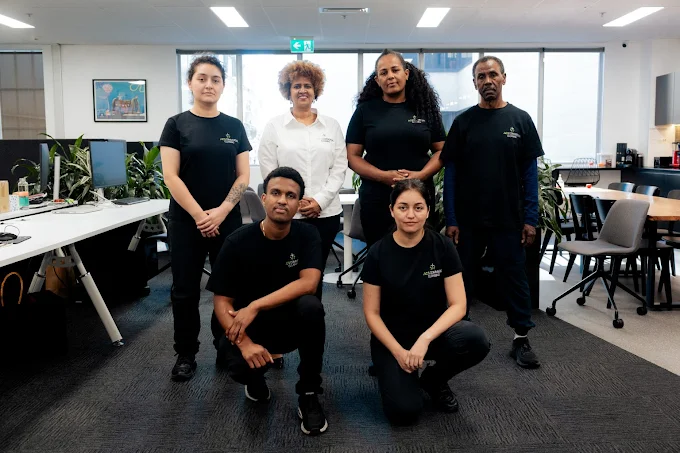
Our approach focuses on long-term commercial partnerships with businesses that value reliability and consistent standards. We employ our cleaning teams directly, maintain consistent site assignments, and back our service with a 30-day money-back guarantee because we’ve invested in the operational systems required to deliver dependably.
Whether you ultimately engage ACS or another provider, you’ll complete the conversation with greater clarity about what constitutes professional-grade commercial cleaning and how to evaluate providers against meaningful operational criteria.
Contact us to discuss your specific requirements, or call 03 9114 9778 to speak with our team directly.
Frequently Asked Questions
Can you switch commercial cleaning providers mid-contract?
Most commercial cleaning contracts include termination clauses that specify notice periods and any applicable fees for early exit. Review your current agreement to understand your obligations. Many businesses find that the operational costs of maintaining an underperforming provider exceed any early termination penalties, making a mid-contract switch financially justified when service quality has deteriorated beyond acceptable standards.
Will switching providers disrupt our daily operations?
Professional commercial cleaning companies manage transitions specifically to minimise operational disruption. With proper planning—including detailed site handovers, clear communication of access requirements, and initial elevated supervision—most businesses experience seamless transitions with immediate service improvements rather than disruption. Providers using dedicated employee teams can implement transitions more smoothly than contractor-based models because they control scheduling and staffing directly.
How long does a typical transition take?
Timeline varies based on facility size and service complexity, but most commercial cleaning transitions complete within two to three weeks from contract signing. This includes site assessment, staff assignment and training, equipment deployment, and initial service delivery. Providers with established onboarding systems and stable employee teams can often accommodate faster timelines when needed.
What if the new provider doesn’t meet expectations?
This concern underscores the importance of thorough provider evaluation before signing. Look for contracts with reasonable trial periods and clear performance standards. Providers offering satisfaction guarantees—such as 30-day money-back commitments—stand behind their service quality and address initial gaps promptly. Continued underperformance despite documented feedback indicates a fundamental capability issue rather than adjustment-period challenges.
Should price be the primary decision factor?
Price matters, but the lowest bid frequently correlates with compromised service delivery through understaffing, rushed service windows, or contractor models with minimal oversight. Focus on value—the relationship between investment and delivered outcomes. Adequate pricing that purchases reliable service, professional communication, consistent teams, and reduced facility management burden typically delivers superior return compared to budget pricing that generates constant oversight requirements and operational problems. Most businesses find sustainable commercial cleaning partnerships require monthly investment between $1,000 and $2,000+ depending on frequency and facility requirements.
What’s the difference between employee-based and contractor-based cleaning companies?
Employee-based providers maintain direct control over their workforce—hiring, training, scheduling, and supervising all cleaners as company employees. This enables consistent quality standards, reliable scheduling, comprehensive training programs, and clear accountability. Contractor-based models use independent cleaners who work for multiple companies, set their own priorities, and operate outside the provider’s direct control. This structure creates inherent reliability and quality consistency challenges that employee-based models avoid entirely.
The decision to switch commercial cleaning providers deserves careful consideration and strategic evaluation. The businesses that achieve the best outcomes treat the selection process as a partnership decision rather than a commodity purchase, prioritising operational alignment and demonstrated capability over price-focused comparisons.
If you’re ready to explore whether a provider change could upgrade your facility outcomes, reach out to discuss your specific situation and what professional commercial cleaning should look like in your environment. We’ll confirm budget alignment early in the conversation and provide transparent guidance on whether we’re the right fit for your organisation’s expectations.

